drawing domestic desorden
In this workshop, we will form a language of the home and the messy practices, las practicas del desorden, that construct these spaces.
In this workshop, drawing is seen as a language of encounter (Tayob, 2020). Accuracy is viewed not as precision, but rather to take care of something, a meaning derived from the word’s etymology (OED, accuracy). Drawing or mapping our encounters within our domestic spaces and practices creates a collective language (written, spoken, and drawn) of domestic desorden. In doing so, we capture and care for our memories by bringing visibility and collectivity to our spaces that are so often invisible and individualized.
April 4-5, 2025
University at Buffalo, Buffalo, NY
Desorden Aesthetics
Translocal Arts & Communities
Latina/x Feminisms Roundtable
14th Annual Conference
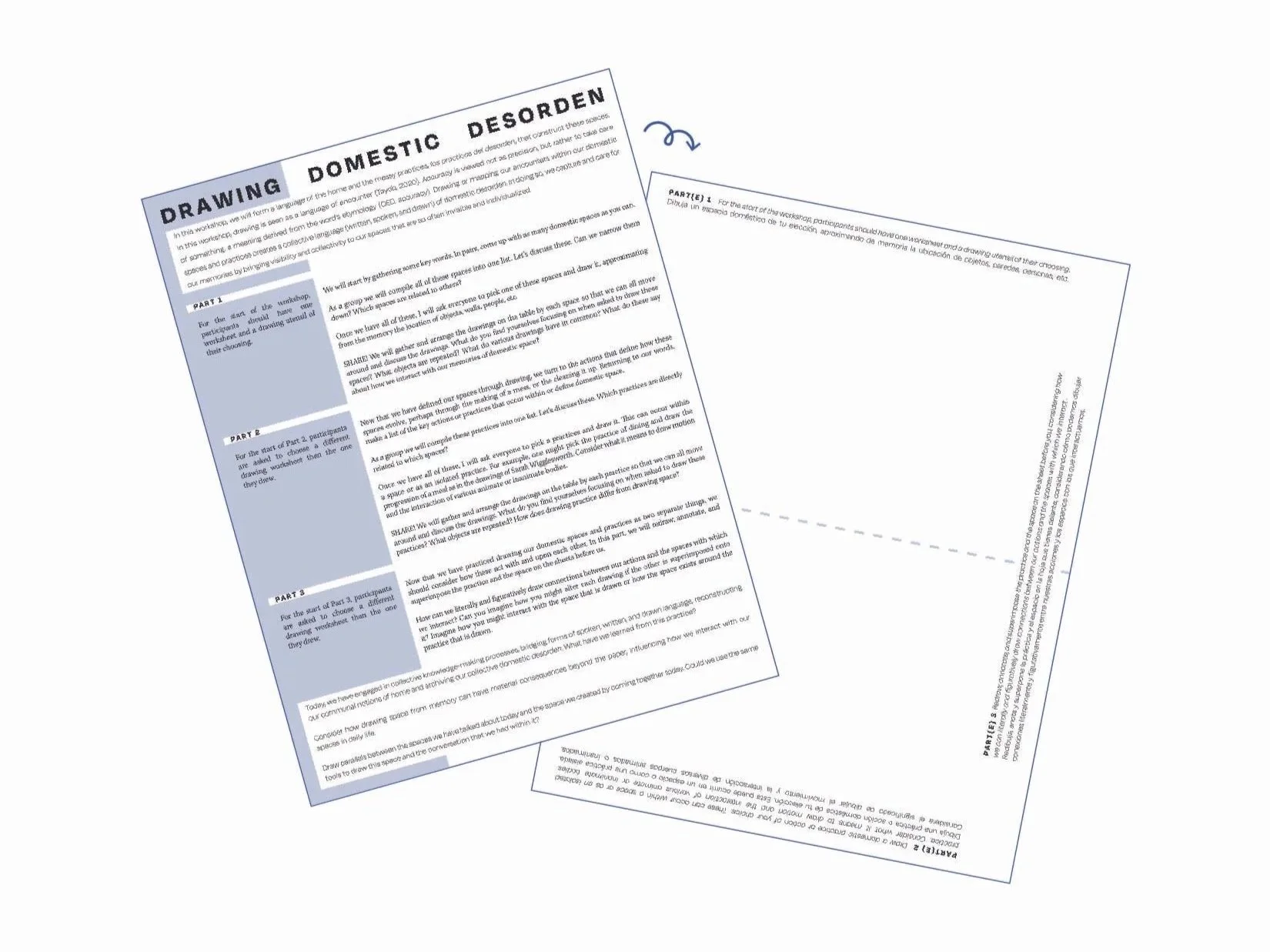
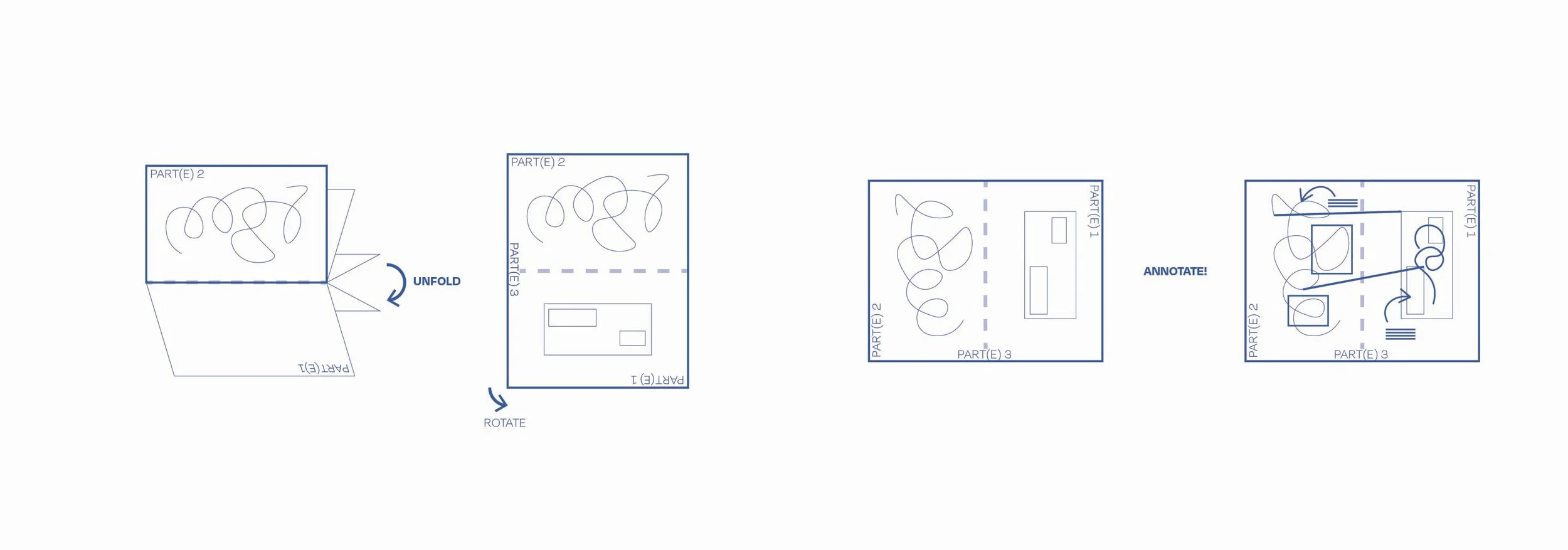
Part(e) 1
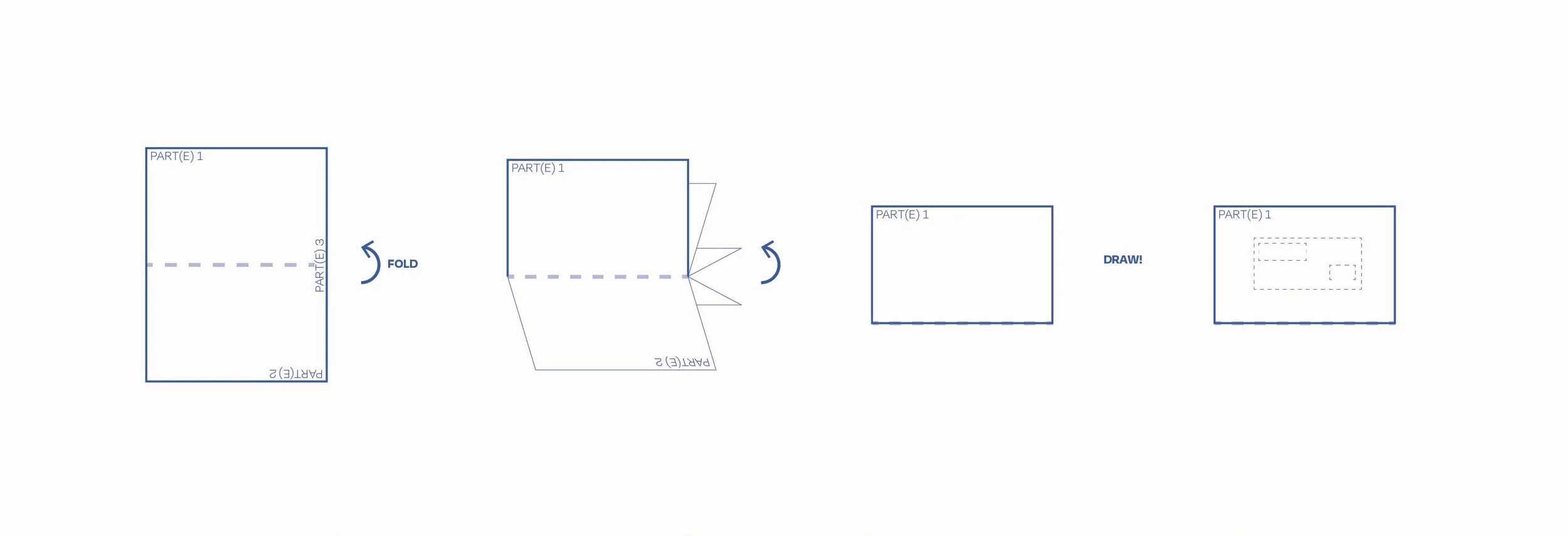
For the start of the workshop, participants should have one worksheet and a drawing utensil of their choosing.
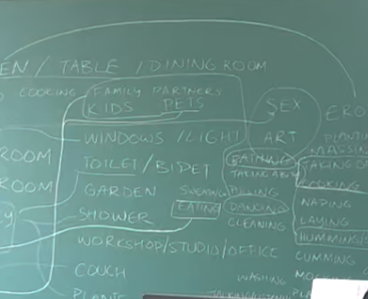
We will start by gathering some key words. In pairs, come up with as many domestic spaces as you can.
As a group we will compile all of these spaces into one list. Let’s discuss these. Can we narrow them down? Which spaces are related to others?
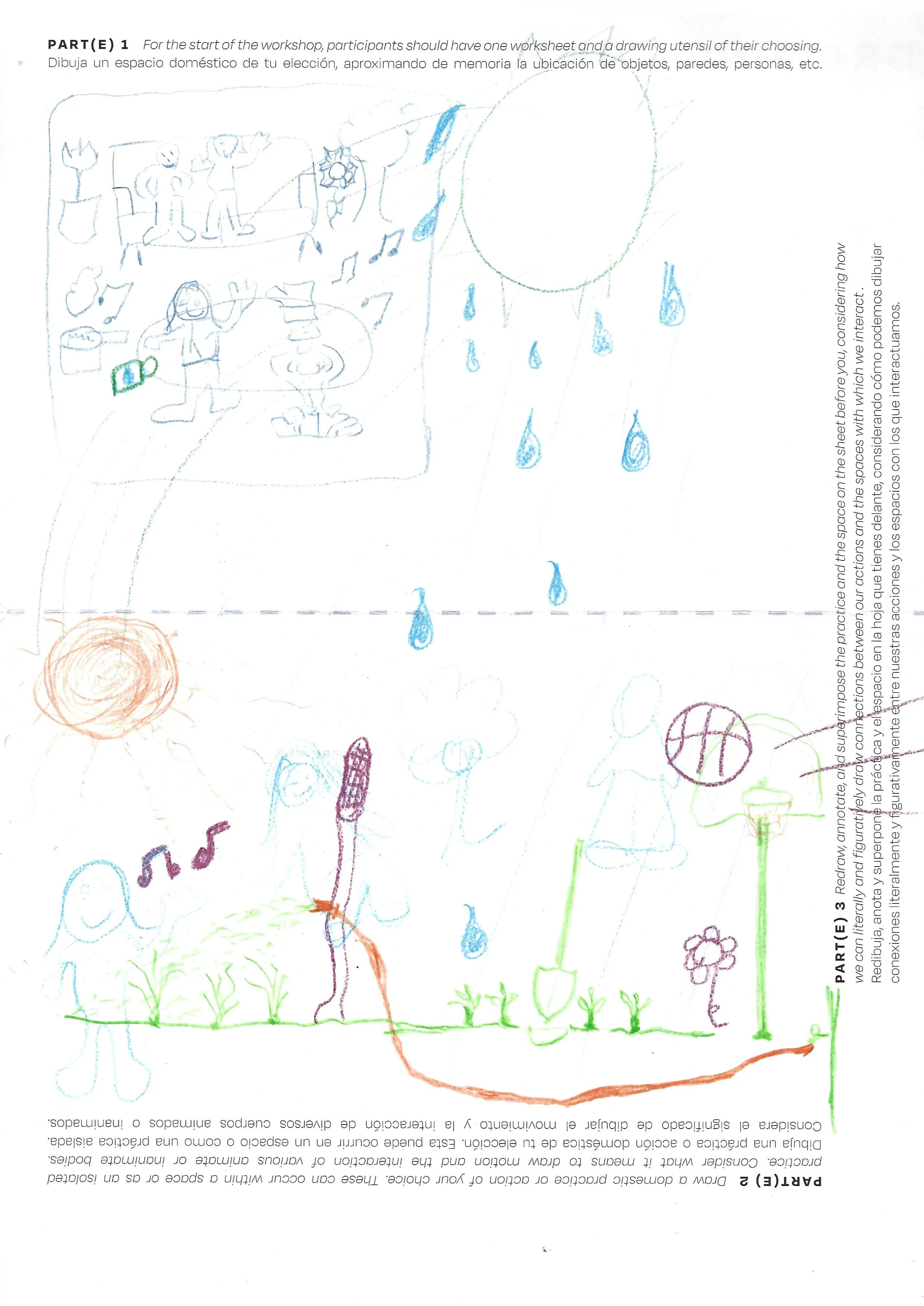
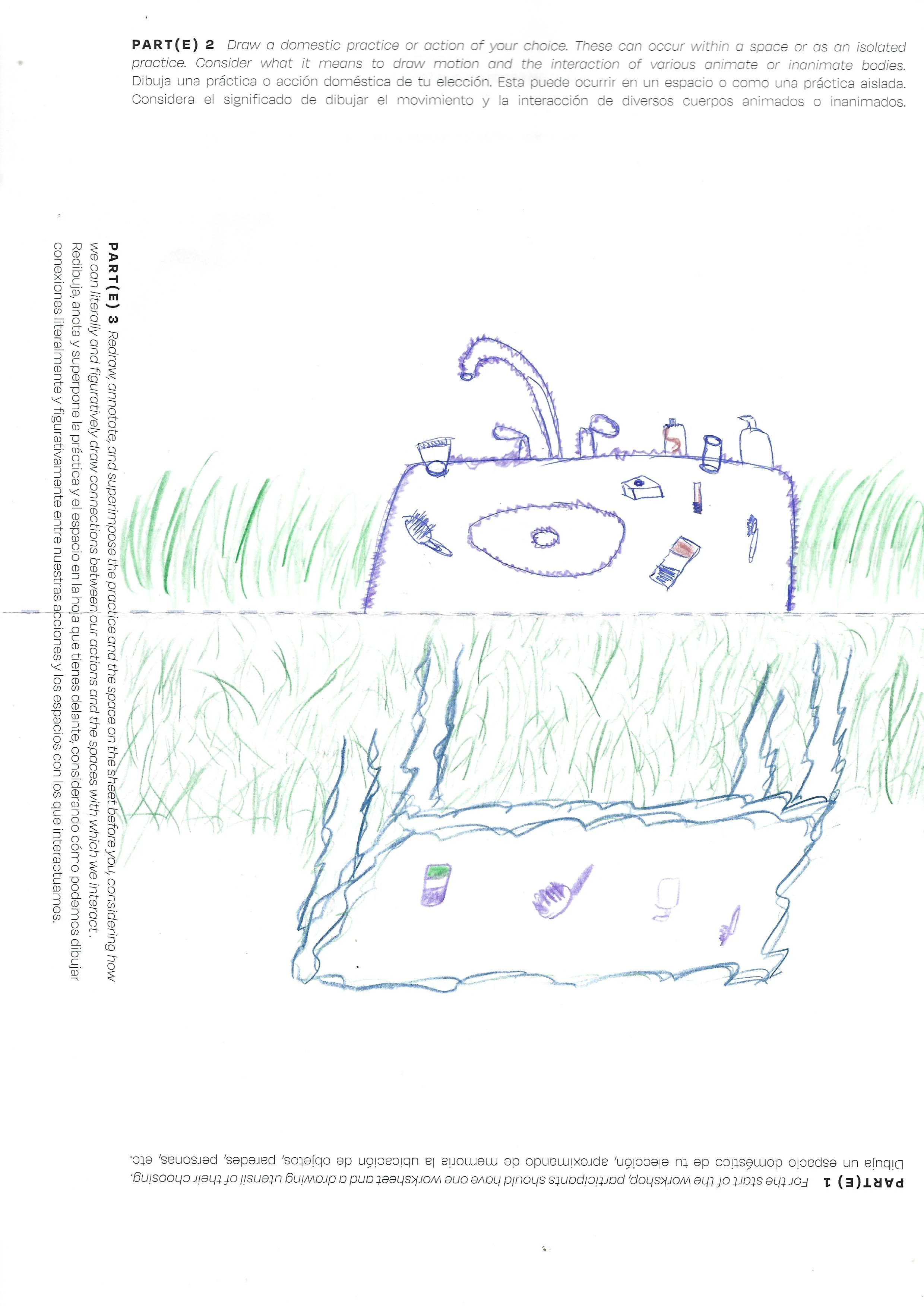
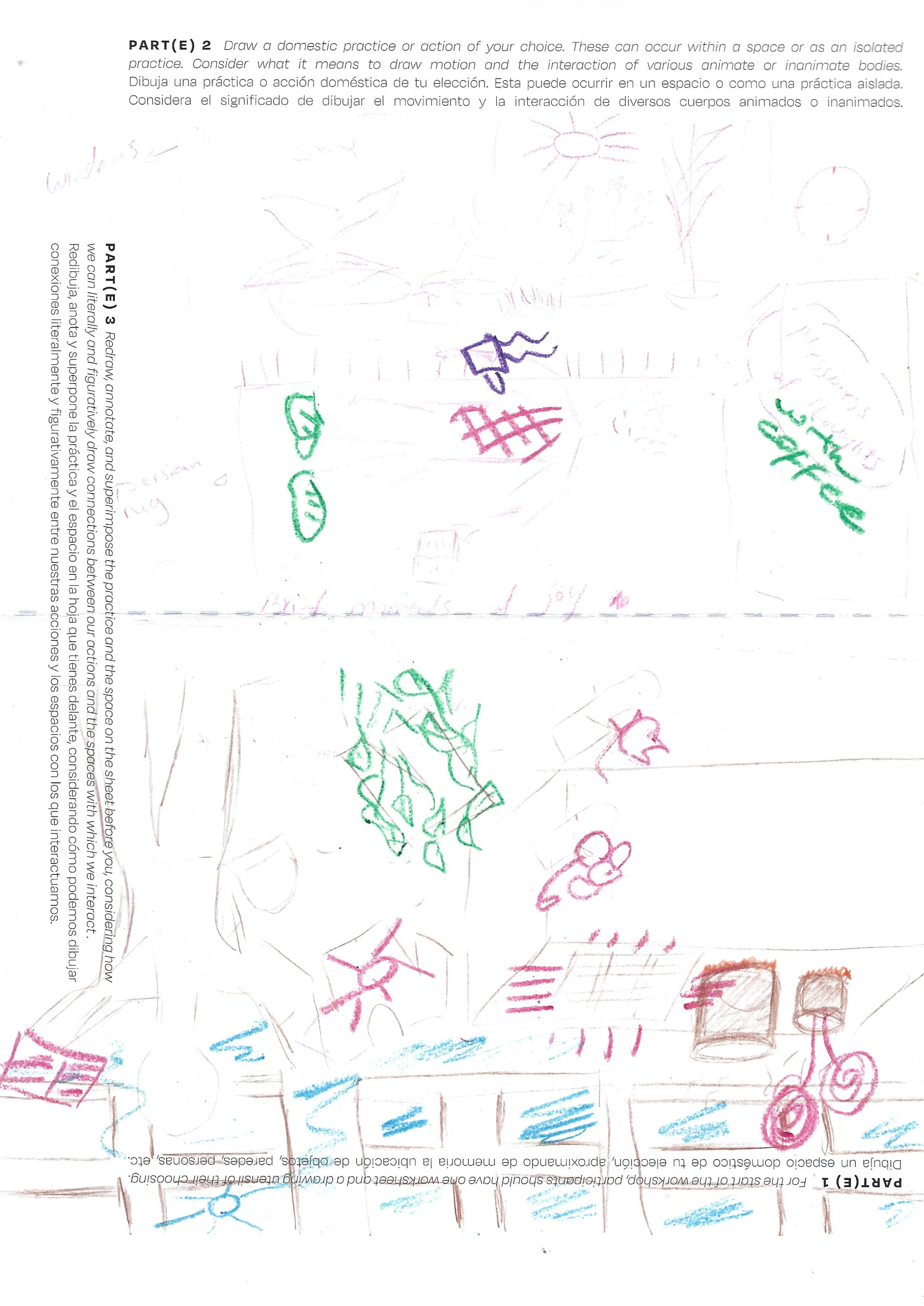
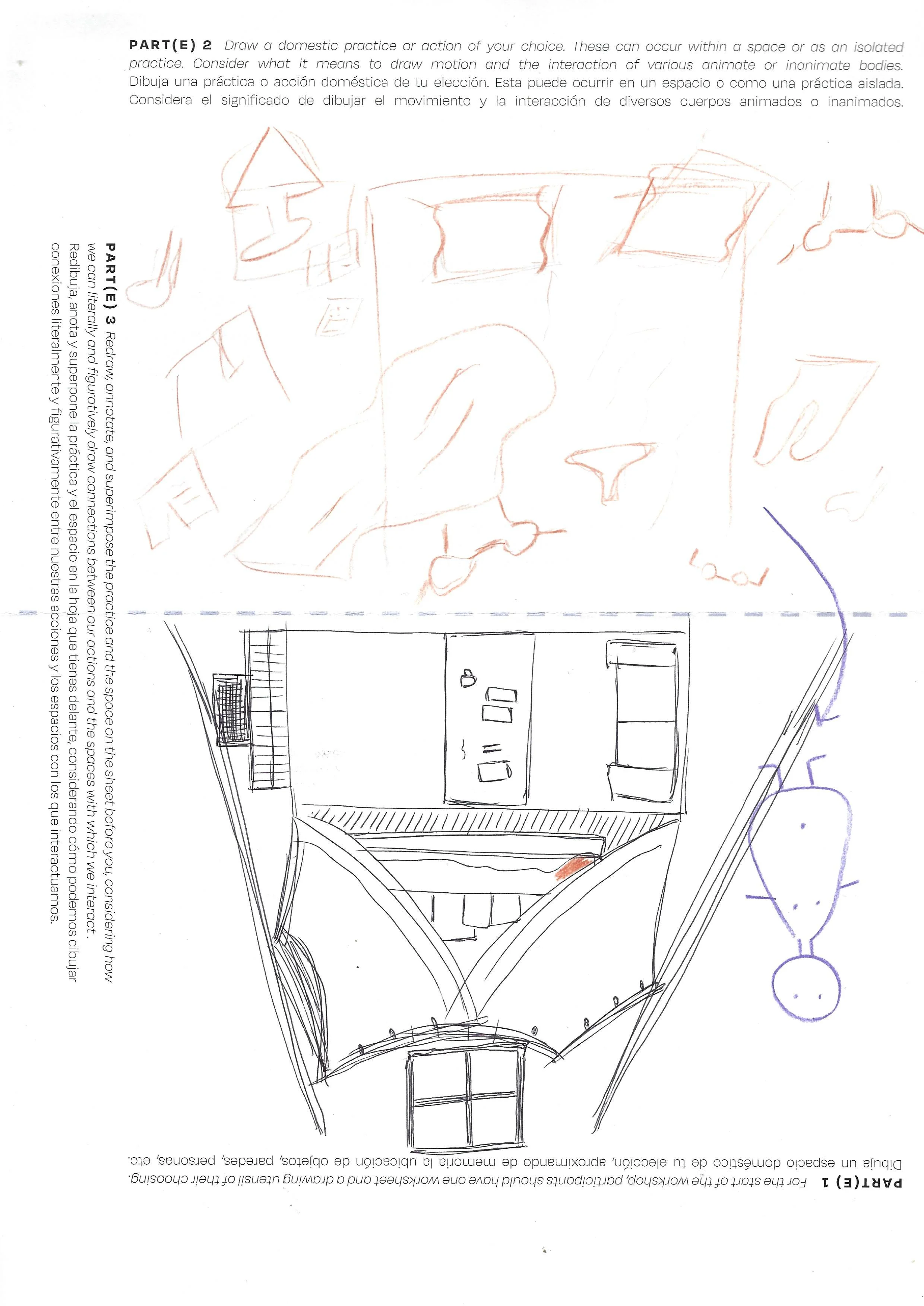
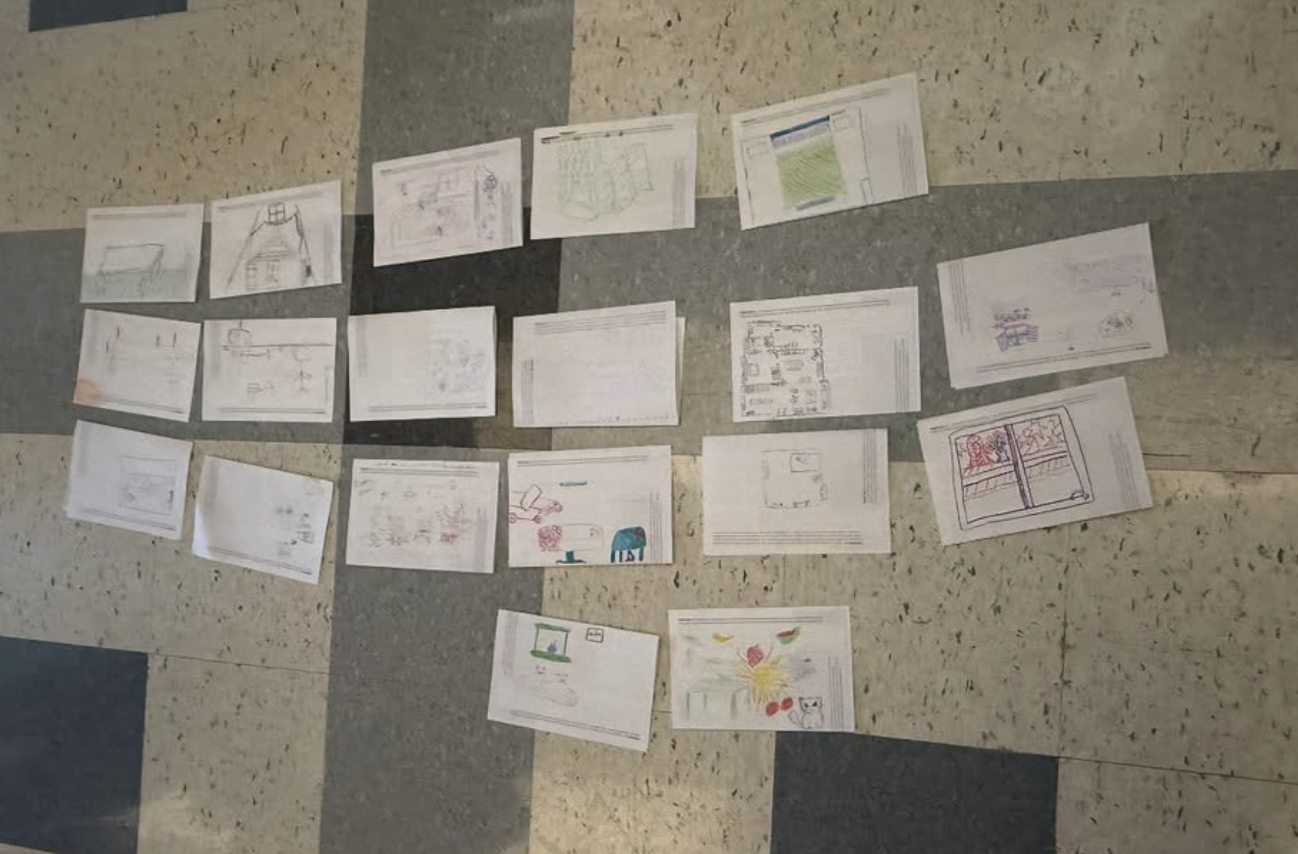
Once we have all of these, I will ask everyone to pick one of these spaces and draw it, approximating from the memory the location of objects, walls, people, etc.
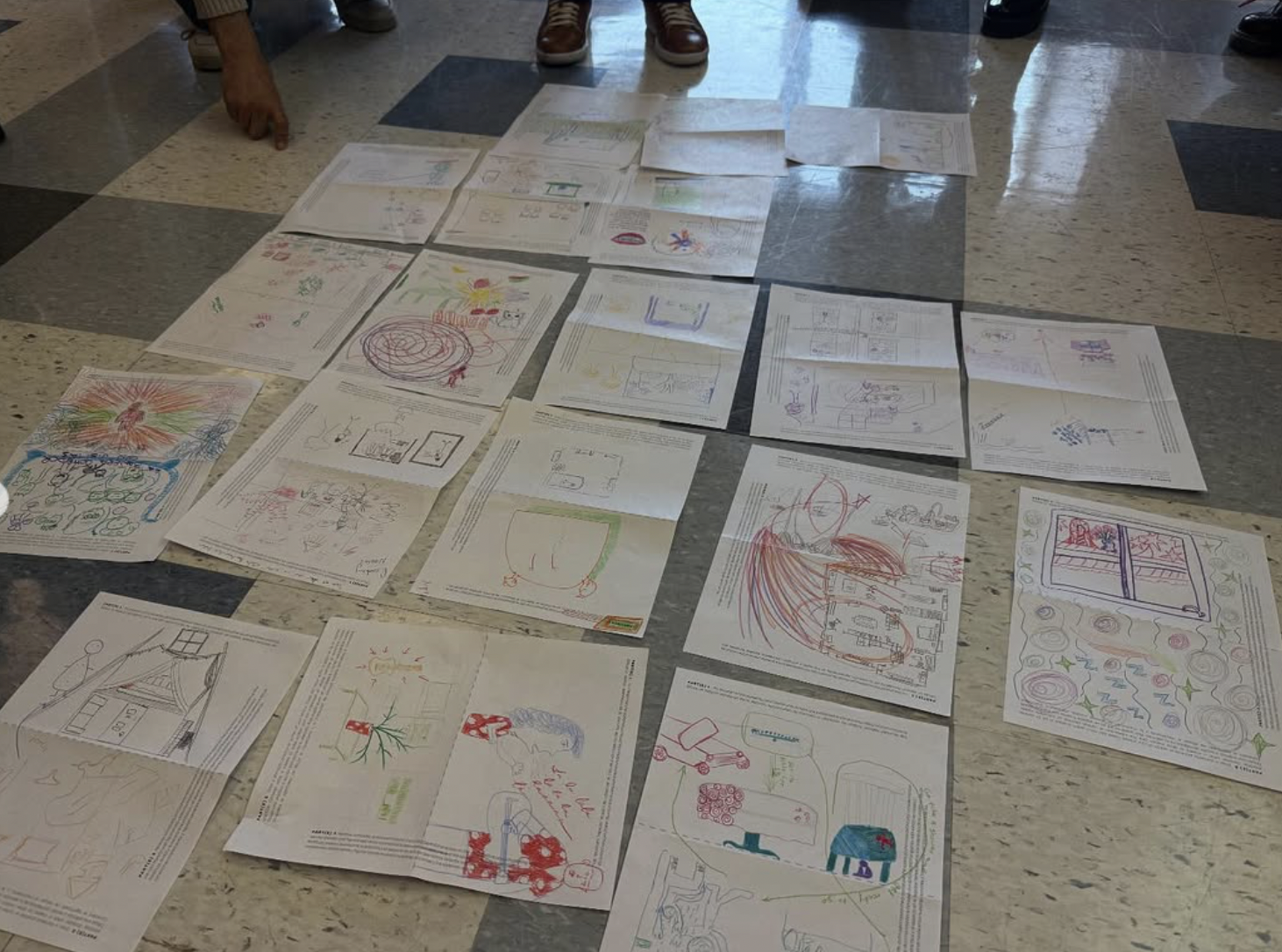
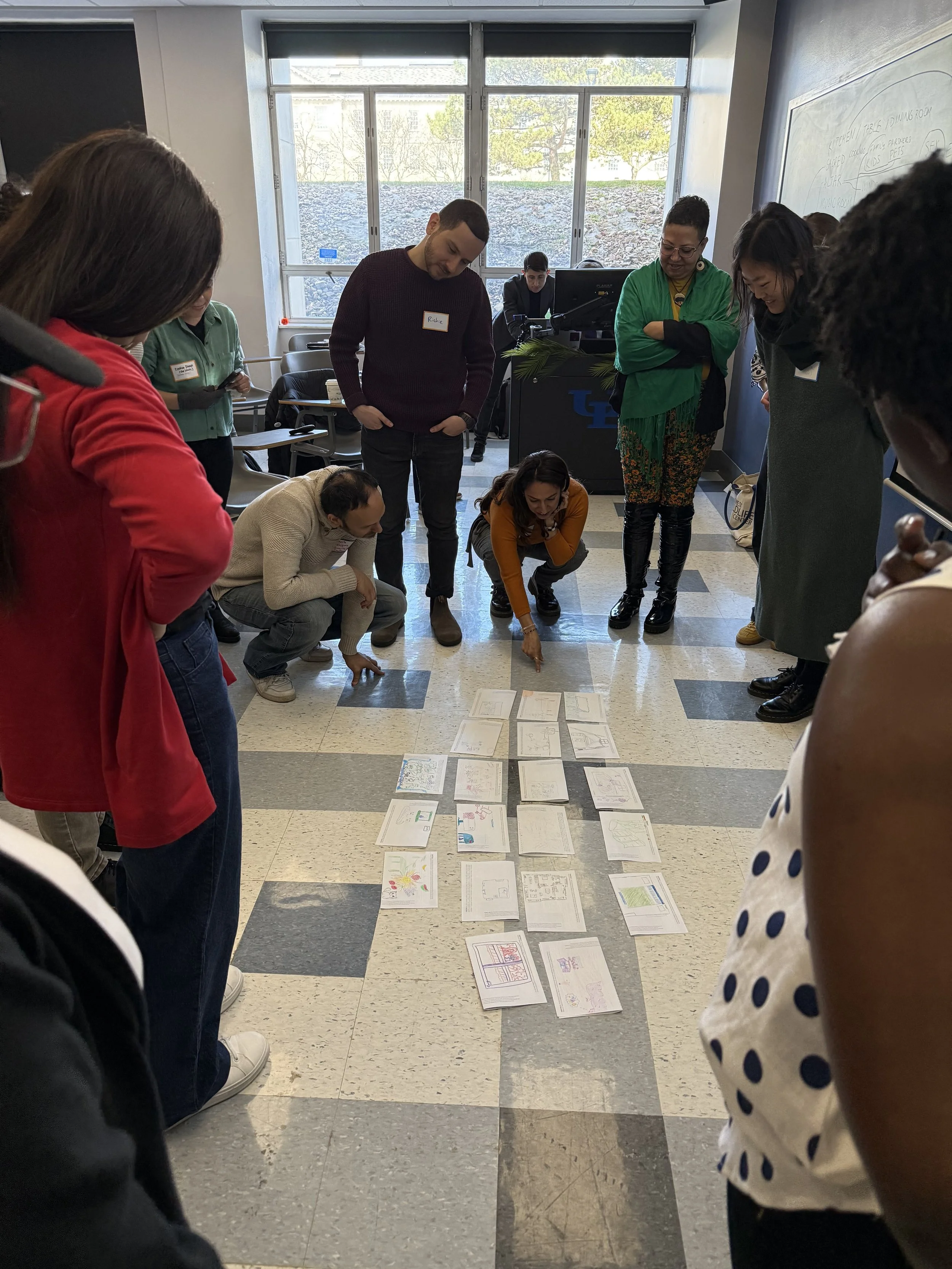
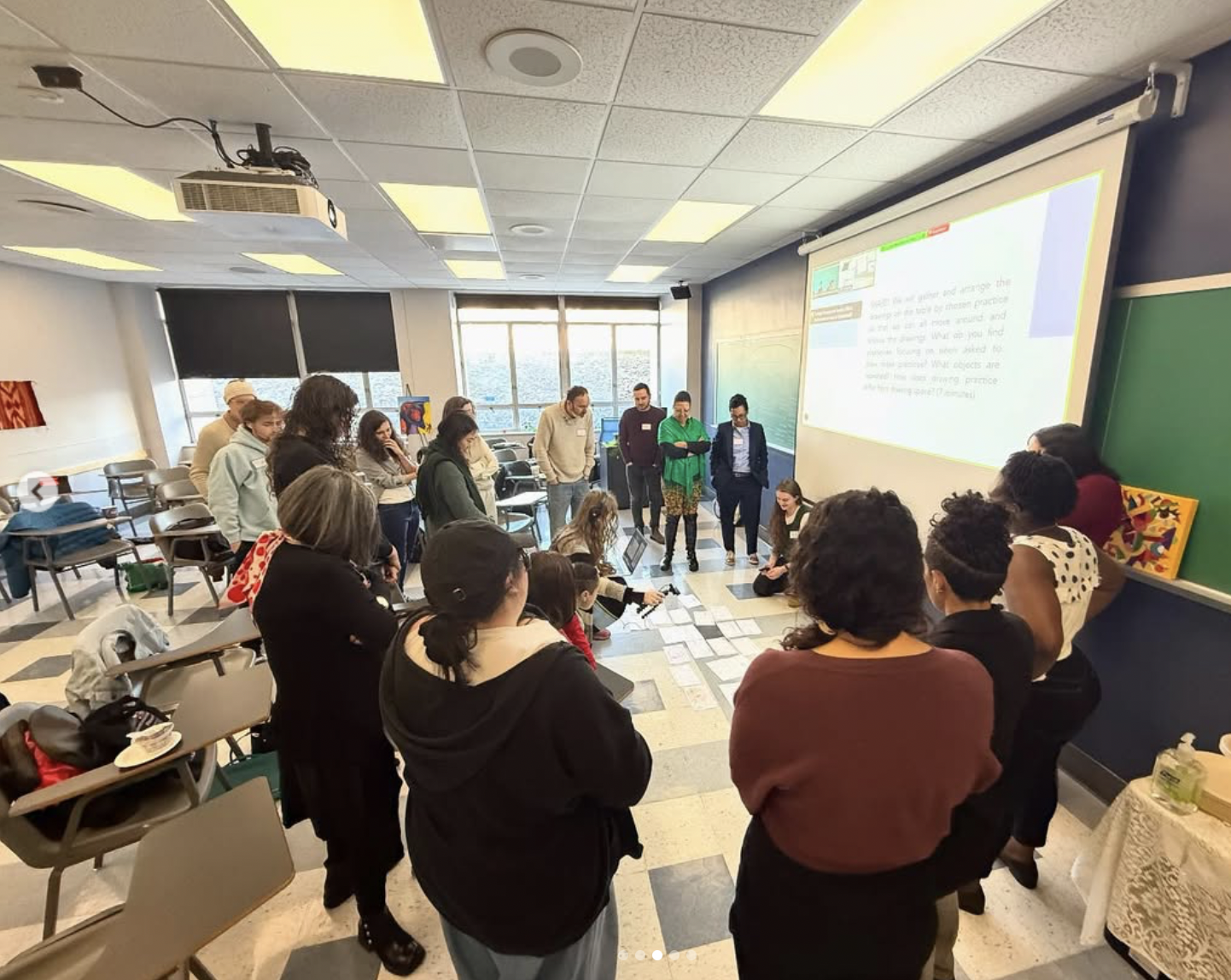
SHARE! We will gather and arrange the drawings on the table by each space so that we can all move around and discuss the drawings. What do you find yourselves focusing on when asked to draw these spaces? What objects are repeated? What do various drawings have in common? What do these say about how we interact with our memories of domestic space?
Part(e) 2
For the start of Part 2, participants are asked to choose a different drawing worksheet than the one they drew.
Now that we have defined our spaces through drawing, we turn to the actions that define how these spaces evolve, perhaps through the making of a mess, or the cleaning it up. Returning to our words, make a list of the key actions or practices that occur within or define domestic space.
As a group we will compile these practices into one list. Let’s discuss these. Which practices are directly related to which spaces?
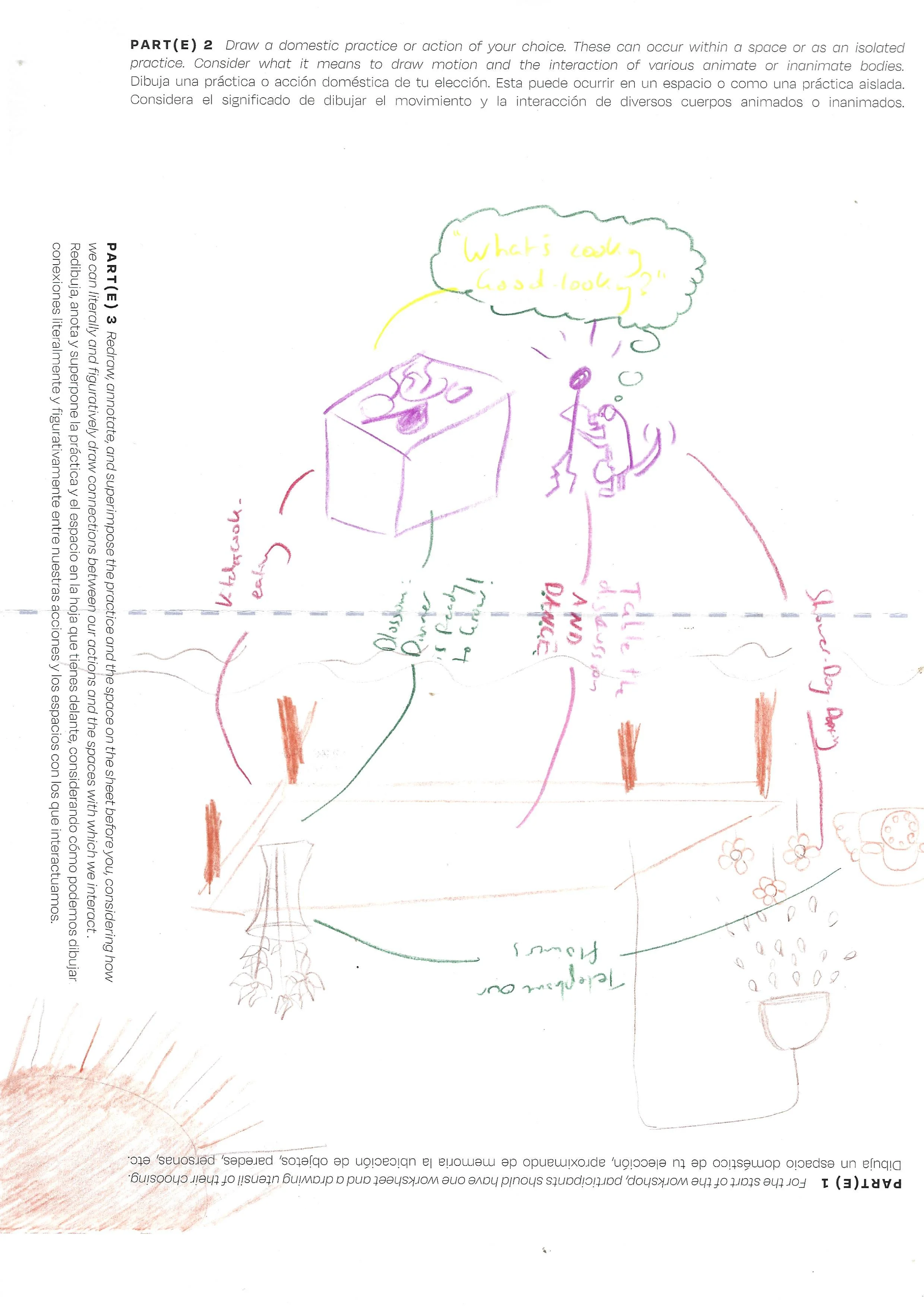
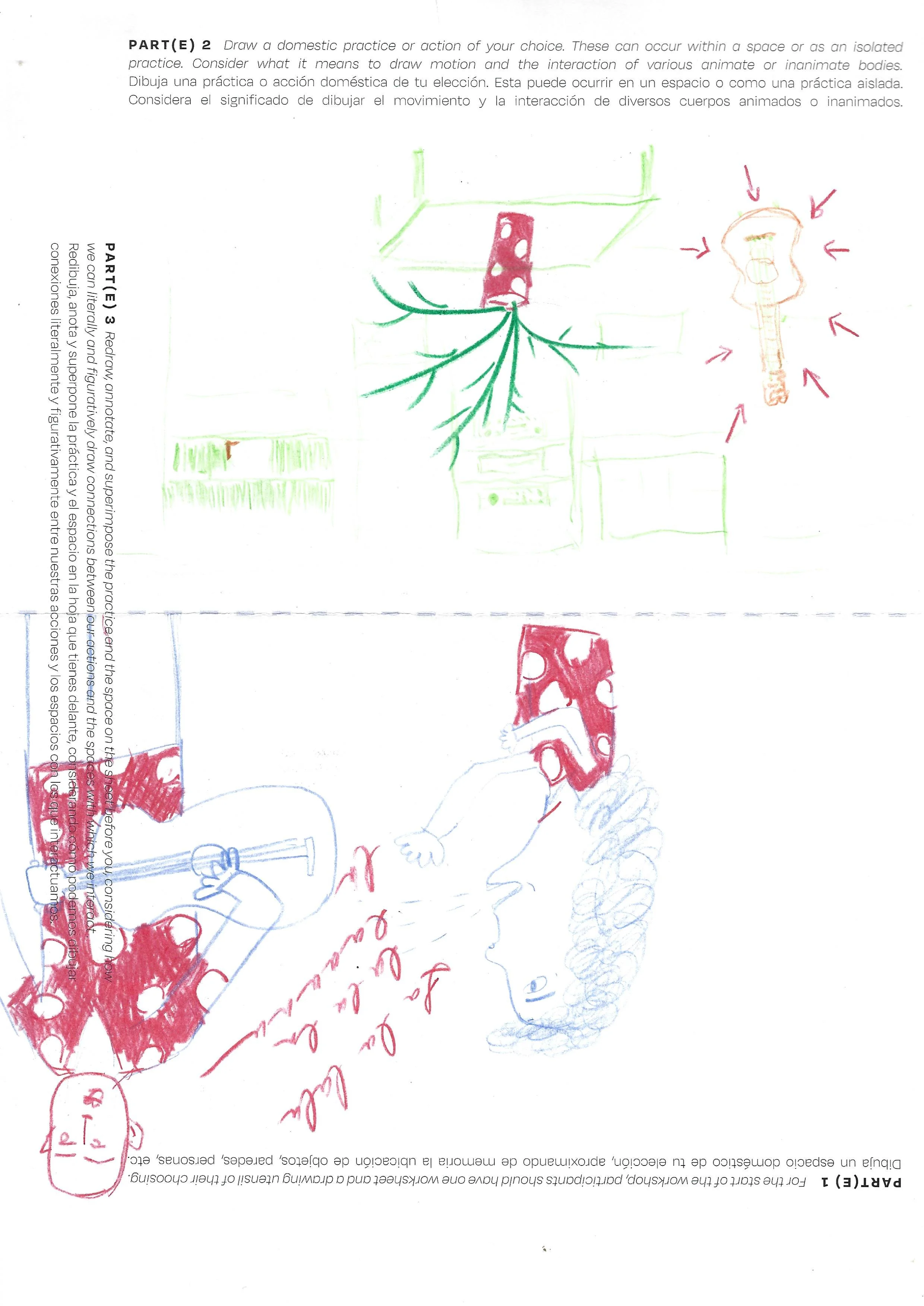
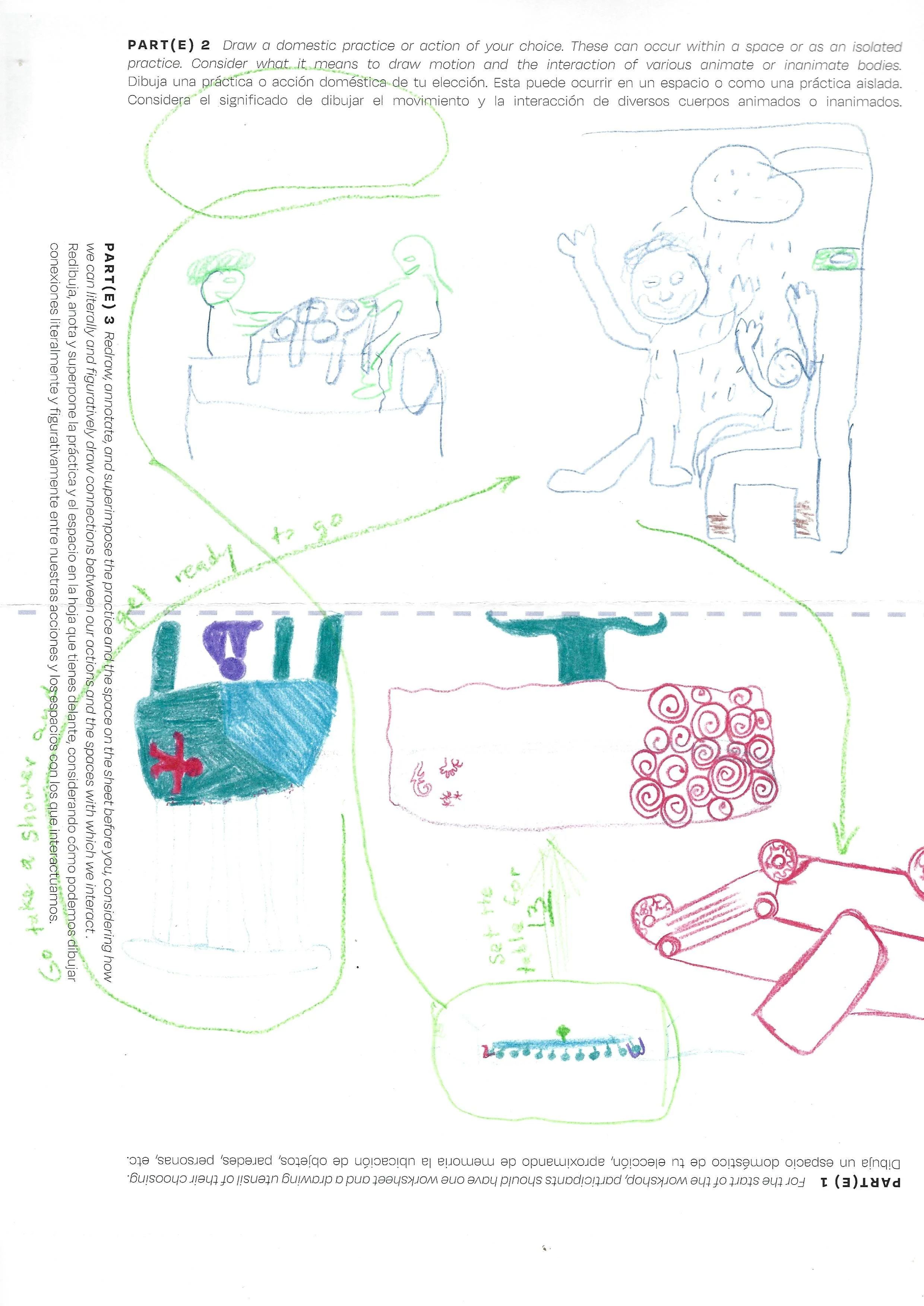
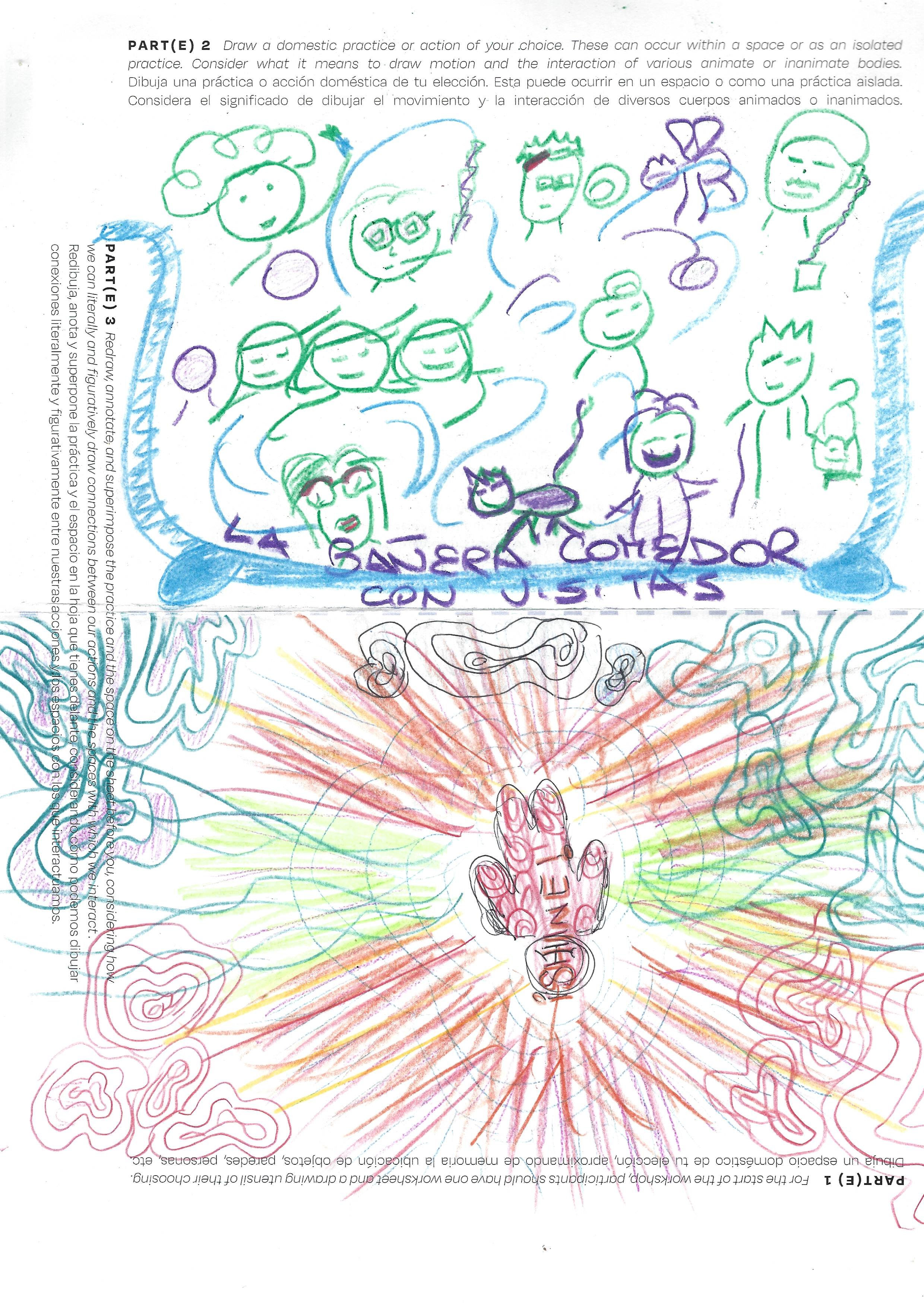
Once we have all of these, I will ask everyone to pick a practices and draw it. This can occur within a space or as an isolated practice. For example, one might pick the practice of dining and draw the progression of a meal as in the drawings of Sarah Wigglesworth. Consider what it means to draw motion and the interaction of various animate or inanimate bodies.
SHARE! We will gather and arrange the drawings on the table by each practice so that we can all move around and discuss the drawings. What do you find yourselves focusing on when asked to draw these practices? What objects are repeated? How does drawing practice differ from drawing space?

Part(e) 3
For the start of Part 3, participants are asked to choose a different drawing worksheet than the one they drew.
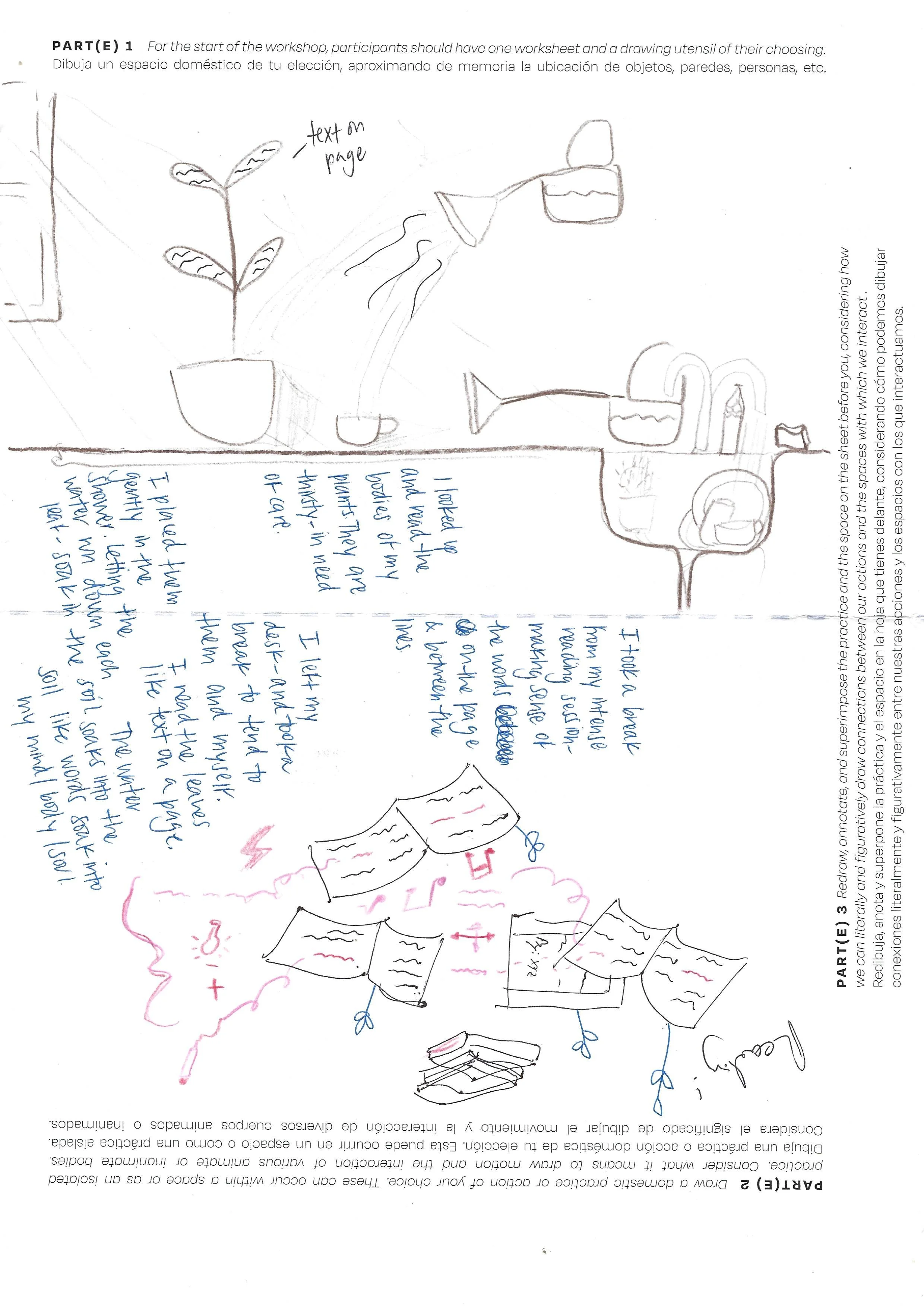
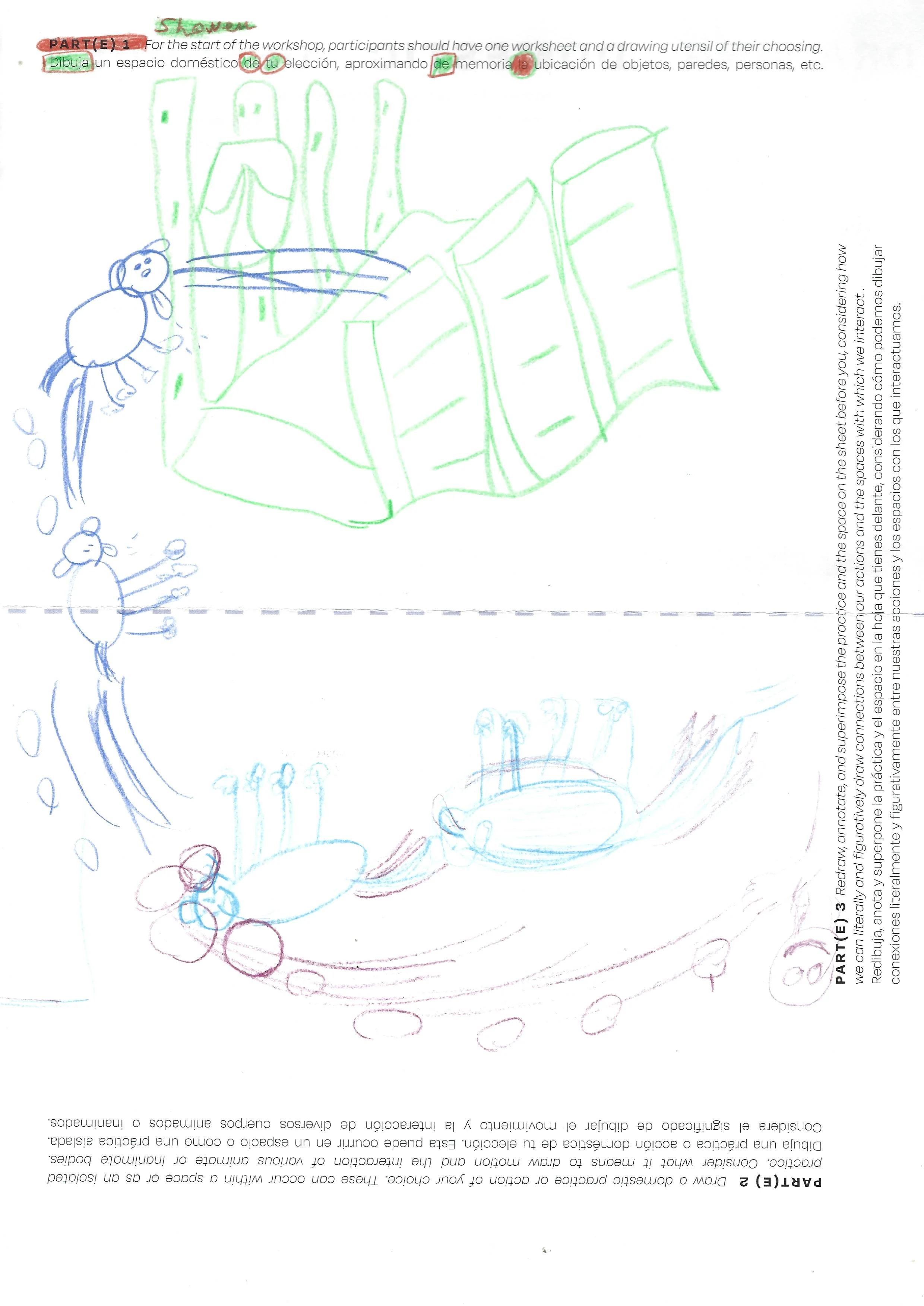
Now that we have practiced drawing our domestic spaces and practices as two separate things, we should consider how these act with and upon each other. In this part, we will redraw, annotate, and superimpose the practice and the space on the sheets before us.
How can we literally and figuratively draw connections between our actions and the spaces with which we interact? Can you imagine how you might alter each drawing if the other is superimposed onto it? Imagine how you might interact with the space that is drawn or how the space exists around the practice that is drawn.